Saturday, January 11, 2014

Becoming an athlete: Building Competence, Making Friends, and Training

Pursuing excellence is a goal for many of us, and Sue Lottridge is one of the best models for this challenging goal.  Here she describes her journey as an athlete and the value of training and friendships.  Of all my friends who are at high levels of training and performance, Sue is the most humble and always the one having the most fun.  Enjoy this piece!

Aside from T-ball in grade school, I didn't do much with sports growing up. In high school I tried tennis, but somewhere along the line that went bad when the coach accused me of writing an anonymous nasty letter. I didn't write the letter of course, but the accusation told me in no uncertain terms: you don't belong in sports. Being resilient, I simply changed focus and worked on academics. I occasionally ran a mile when I felt fat and lifted weights but didn't do sports for much of my 20s.


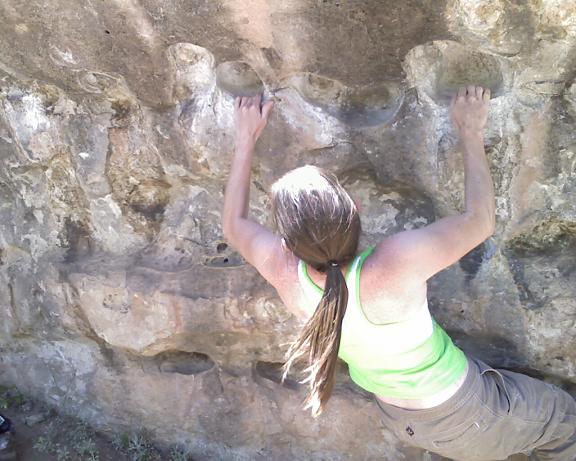
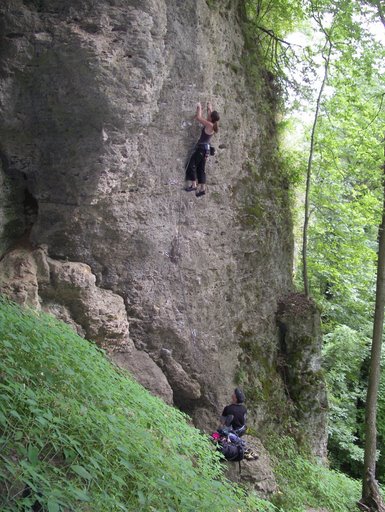
Then Boulders climbing gym opened and as John Bingham says, “I became an adult-onset athlete.” As I think happened with a lot of the new climbers, I became... well… obsessed with climbing. I was terrible, having no athletic background at all, but loved climbing for the simple pleasure of movement and the quick advancement that sport provides. I climbed pretty much every day and miraculously escaped overuse injuries. And, for the first time in my life, I became good at a sport! I loved the feeling of competence and of strength. And, since the gym was new, everyone was progressing the same way, making for a fun and vibrant community of climbers and boulderers. The Madison Women Climbers group was born and through that, climbing at the gym, and at Devil's Lake, I met inspiring, strong, athletic women. The fun times learning problems with Vera, Annie, Lisa, Amy, and Lindsay were some of the best in my life and I miss all those women dearly now that I live elsewhere. I read a quote recently and have no idea whether it is true in general but it is true for me: "The most reliable predictor of not being lonely is the amount of contact with women. " (The Happiness Project). Through climbing I learned the value of simply hanging with the girls (sorry guys!).


Paul and I moved to the Shenandoah Valley in Virginia and I quickly learned that what I value most about sport is not the sport itself but the community. In Harrisonburg, biking is king; the community is strong and there are rides every day of the week. There's actually fantastic climbing in Virginia/West Virginia, but the community is small. So, climbing took a back-seat. I learned to get over my fear of gravel, of rocks, of logs, of speed, of off-camber, and got in darn good shape climbing mountains. And, what I learned in Harrisonburg was to simply enjoy myself and make fun the priority of riding. There, probably in part because the riding is so technical but also because the people there are just so chill, group rides consisted of newbies like me, professional mountain bikers, and everyone else along the spectrum. This made for lots of learning and lots of fun and cemented in me a deep respect for group rides (and the obligatory beer and pizza or Thai after). And, once again, I met ridiculously strong and fun women and rode countless hours with them (and even climbed). Kristin, Amy, Anne, and Rachel, I can't put in words how much I miss you!


Well, now I live in Colorado and have taken up "training for races," mainly just to see what I'm capable of -- to take me in a new direction than just fun. This has opened up a whole can of worms in that those old "you don't belong in sport" issues learned in high school arise and I have to remind myself that I'm just as allowed to train and race as the next person when I pay my race fee. And, even though I'm certainly no great athlete, I still can have a goal that is important to me. It's an interesting thing, to train. It's here where you come face to face with your own limitations, where you put faith in the plan, you put in the work, and you hope it pays off. For me, training has been pretty solitary, the opposite of my time in Virginia and Madison. It allows me to achieve things I've not thought possible and in the end challenges me to be a better person by pursuing 'excellence,' but at the same time I wonder if it’s worth it. The current challenge in my athletic life is: how do you train for a goal AND be part of a community, especially a community of women athletes. I have yet to resolve it, and if you have any suggestions, please email me!

So, in the end, my athletic journey, like much of my life, has been following my nose and interests in new areas and seeking challenges. It has led me to new sports, new places, and new approaches to sport. I'm grateful for them all and to all the people I've encountered along the way. Even with my current reservations, each experience helps me to see the world in a new way, simply enjoy feeling of using my body, and feel strong and competent. I think in the end, that's what it’s about: enjoying experiences, challenging ourselves, feeling the beauty of movement, and enjoying it with people we love. Even with the occasional doubt, I now know I "belong in sport" but on my own terms.


Hate the role or love it, Sue Lottridge is a psychometrician. She leads the efforts at her company to develop and use an automated scoring engine which employs computer programs to score test-taker responses to constructed response items, essays, and the like. In short, she is a geek, but reasonably pleasant to hang out with in spite of it. She loves rock climbing, mountain biking, trail running, and open water swimming and is planning to do her first ironman this coming summer in Boulder.

Wednesday, January 8, 2014

Change: Realities of an Active Climbing Family

Fitness and how people grow and change is really interesting to me. I've been following Jamie Laurer's life for several years now and always love seeing her family out hiking and climbing. I wanted to know more about her lifestyle since most everyone knows that being a working family with personal goals is dynamic and ever-changing. I related with gusto to Jamie's sentiments and experiences that I actually teared up remembering the challenges and joys climbing as a young family. Here's a wonderful account of the realities behind the scenes and a few tricks to share when being active outdoors with young ones. Enjoy!


Doesn’t this photo look as though climbing as a mom or working out as a mom is a piece of cake?  I am here to tell you what this photo failed to capture was a morning filled with tears from a 2 year old young daughter (who I adore named Kaitlin) who did not want to hike into the bouldering area. That was followed by the fact that we weren’t even sure how to fit everything into our crash pads.  We looked like two gumbies with overstuffed burritos on our backs and two toddlers who were not happy about our adventures.  The bonus part is that you will clear out an area in no time and have the place to yourself.


I was honored when Vera wanted me to write a piece for her blog.  This writing will capture what it is like to work out with a family and find our own time to train as climbers.  Prior to having kids, my husband Tom and I lived in Phoenix and climbed almost every single weekend.  We made great friends and had so many awesome memories.  Neither one of us have ever been afraid to explore or take risks, until we became parents.   When our son Ryan was born I was so tired and overwhelmed that I had no idea how to work out or take a child outdoors into our climbing world.  My husband wanted to take a road trip with Ryan but I was too full of hormones to see the value of this trip (which I still regret not taking.) I am not afraid to admit that when I take a peek into the past, I was so nervous about being a new parent that the only thing I could think about was making it to the next day.  Everything went out the door the first few months including working out and climbing.  I am always impressed with the articles about the young mothers who have newborns at the crag.  I’ll be honest and say I wish I could have been as carefree and confident as they were when my son was that age.  


Climbing and working out is not a hobby for Tom and me - it's a lifestyle.  If too many days pass without working out or climbing we both get very grumpy. 

Fast forward about three years and we found our groove. Tom’s job relocated us back to the midwest.  Because we had two toddlers, making it into the gym was not going to happen easily so we turned our basement into a climbing wall.  This was a pretty easy project as we had a huge climbing wall in our home in Phoenix. We actually looked at homes based upon space for our wall.  That’s what climbers do and real estate agents look at you like you’re crazy.  We had a 15 foot wall in Phoenix in our front living room because we had 23 foot ceilings.  Tom is an expert at building them and he has a great vision for spaces.  We are both into bouldering and love steep climbing so we went to work building the wall of our dreams.   I was in charge of the math and Tom was in charge of the actual building.  I strongly suggest if you have the space and you’re a climber...build it. 

We train all the time.  Once at Shady Grove in the Red, Tom just finished onsighting a 12b and another climber asked him how he trained for it.  His reply “I just climb in my basement all winter. ” The other climber was shocked and said “that must be one hell of a basement.”  


When Ryan was about three and Kaitlin two, we decided that we were going to get back into our normal lives and take these little guys on the adventure of a lifetime...hanging out while we climb.  We started with little trips to Hoot Bluff in Iowa and graduated to the Red River Gorge and one of our favorite places in the whole world (where we had our first date), Jackson Falls, Illinois.


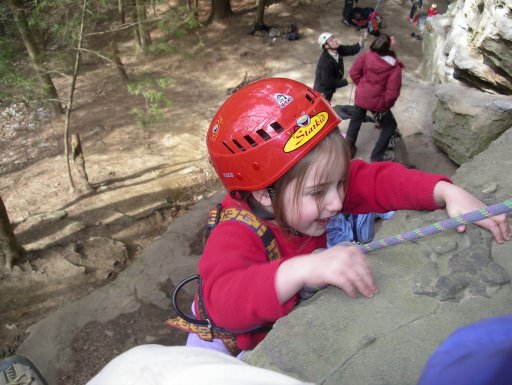
This little photo is of Kaitlin ( age 2) topping out at Torrent Falls in Kentucky.  It was not easy to tote two toddlers, but I figured out some tricks. I always went to the dollar store and put little presents in their backpacks that they could open when we got to the crag. This was a motivation to hike.  We also bribed them with “treats” from the gas station to motivate them during the hike back.  This is especially important if you’re in Muir Valley.  Once Tom had to put 2-year old Kaitlin (who refused to hike) in the sling and carry her up from Muir Valley with a 50 lb climbing pack on his back.  

I will also tell you that projecting a route can be impossible.  I don’t know how they do it but they know when mom is on the rock and that’s when they decide to start WWIII over some lunchable. This is why I get upset when I read a climbing mag about some woman who has 10 kids, works 80 hours a week and climbs 5.13 like it is a walk in the park.  My husband always teases me when he reads these articles.

What they don’t tell you is that she has a nanny, took a sabbatical from  work and trains like a dog on the rock.  She also has a crag in her backyard as well and never takes her kids with her when she is on a project.  Honestly, these kinds of stories do not motivate mothers, they make us feel like incompetent women.  A little voice inside my head would say “What the hell is wrong with you?  You stay at home and only have two kids so why aren’t you cruising 5.15d?”  In my defense I did finally redpoint Gravity Amp (12a) in Iowa over a three year span, fell at the anchors of Golden Shower (12b) the climb right next to it about a million times (currently still working on that one.), ran a PR in a marathon and  won a few tennis tournaments which seems to pale in comparison to this superwoman.  


While I am not even close to climbing a 5.13, I was acclimating our kids to travel, adventure and climbing.  They became the best car travelers at only 4 years old and could easily manager a 9-12 hour car ride to the nearest crag. I became an expert at giving out little presents every few hours into the ride or renting the right movies.  Travel was a lot slower than when Tom and I used to drive together but we didn’t care.  Honestly, we both peed in bottles to save time from stopping.


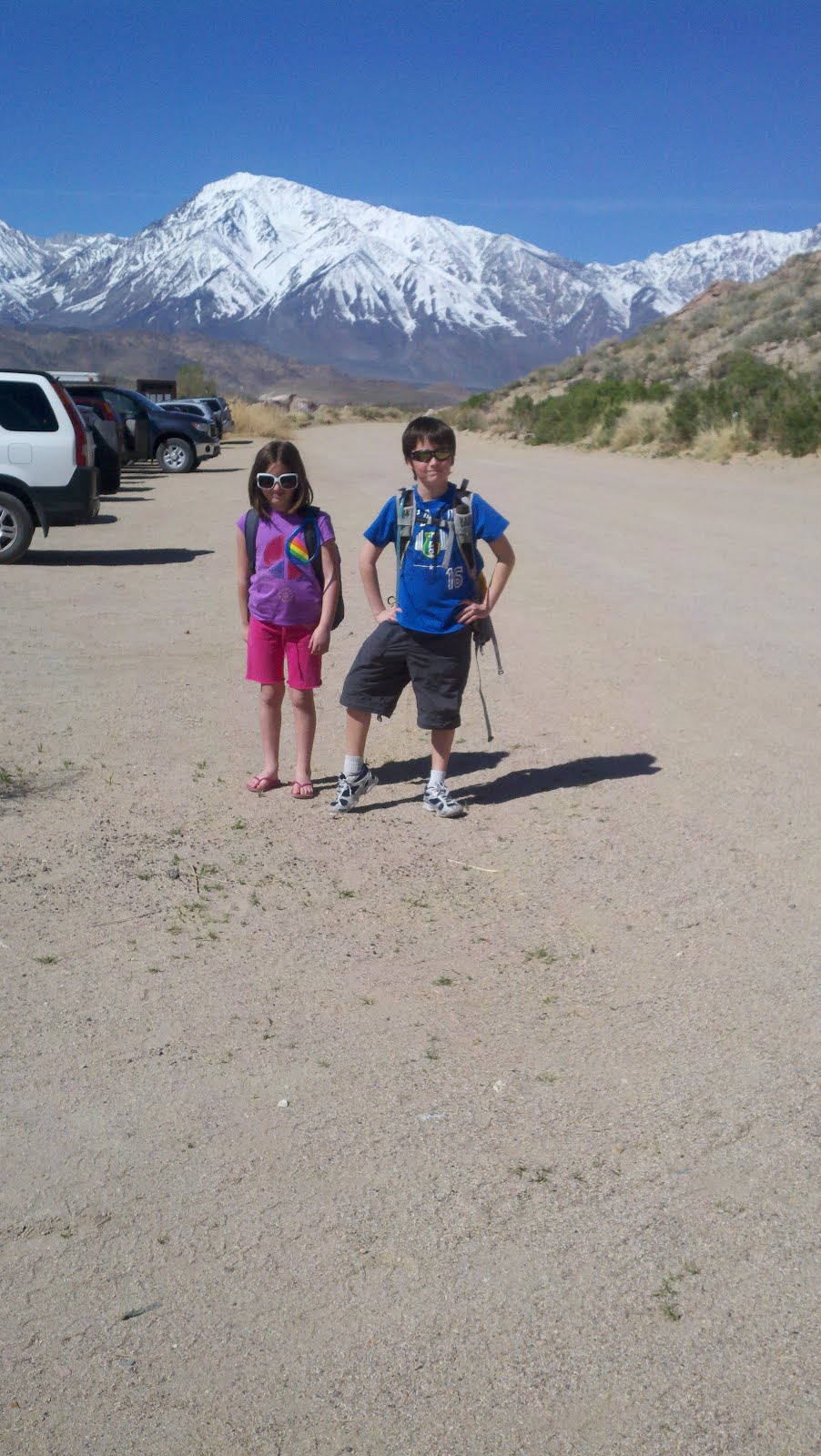
We flew with them to Bishop to boulder and just watching their expressions as they saw the desert for the first time was awesome.  These kids didn’t need electronics to have fun.  They would spend hours in the desert, the forest or the boulders of southern Illinois making their own fun. To show just how tough any kid can be, a few Thanksgivings ago, we camped at Jackson Falls for our annual Thanksgiving tradition.  The low at night was 22 degrees.  To warm them up in the morning we sent them out for firewood.  They had a blast carrying back big trees together and we got a kick out of watching them.  This year was our first year staying home for Thanksgiving and Kaitlin commented “but camping is our tradition and I miss camping.”  Music to my ears.  


A few years ago we did take an unforgettable road trip.  As a family we camped for two weeks and traveled out west.   The kids still talk about how awesome that trip was and about how much they learned.   There were hiccups with older children too as it was 100 degrees on our first 5 travel days and everyone was grumpy.  I believe we all hated Mount Rushmore because we hiked around it in 105 degrees and we had just gotten out of the car after 20 hours of family time.  Eventually we all acclimated to the weather and had one of the best trips of our lives.  We shared so many laughs at the Cody rodeo and were anticipating Yellowstone.  Their favorite part was whitewater rafting down the Snake River in Jackson Hole.  At the time my boss (who claimed to be this big outdoorsman) asked how the camping went wondering how many times we had to abandon our plans and hit a hotel.  I replied it was so awesome, we never had to stay in a hotel.  He was shocked as he tried taking his three young girls camping and lasted two hours.  I told him not to give up and that there will be more challenging nights initially but they will learn to love it.  


For us, working out as a family is something we have always done and will continue to do.    I won’t lie to you, there were plenty of tears and meltdowns at the crag or on a hike.  There were times we even thought to ourselves “Why in the world are we doing this?”  If you expect many hiccups or delays then you will never be disappointed.  As a teacher I’m ready when organized chaos presents itself.  

Now that the kids are 12 and 10 they are into their own sports.  That has thrown us another curve ball for working out and planning.  It's hard to fit in climbing workouts when we are running around every day of the week.  It took us two years to figure out that “you pick a day for working out and you stick to it.”  Too many times we were guilty of rescheduling at the last minute which ended with missing workouts.  Any workout is better than no workout.  I live by that and often have to remind myself of that when I’m trying to climb but all I can think about is the pile of laundry and the AP chemistry test I forgot to write.  


Right now we aren’t able to get outside climbing as easily because our weekends are full, but we’ve adapted by using our holiday breaks as travel times to different crags all over the country.  During the hot summer months we wakeboard and waterski up north.  During the winter months we hit the slopes together. To my own surprise my own kids got me into a new sport when I signed them up for ski club.  Now we ski and snowboard almost every winter weekend.  It is so much fun when your kids are cheering you on.   

Don’t ever be afraid to start working out with your kids no matter what your age.   If you’re afraid to take your kids out with you, don’t be.  There will be people like me somewhere in the area to cheer you on.  


Jamie is fortunate to belong to a very active family which includes an awesome husband/workout partner/belayer named Tom and two adventurous kids, Ryan and Kaitlin. All have taught her the value of staying young and trying new things. Tom and Jamie both grew up in Illinois, and have also lived in Chicago and Phoenix. They are currently residing in Hartford, Wisconsin.  During the day, Jamie has the honor of teaching 160 students all different levels of chemistry. She likes to blow things up (all are invited to come see her Halloween show.)  A student once asked her if she had any normal hobbies as all of her hobbies seemed extreme.  Having never really thought about it that way, she went through the list in her head and got her student's point!  List in head: rock climbing, water skiing, snow skiing, trail running and tennis.  Tennis seems to be the only normal one in the bunch.  Every year after the AP Chem exam she shows a rock climbing video for the remainder of the testing week.  It’s one way of showing them a glimpse into her world.

Tuesday, January 7, 2014

Change: Rework

Now that I'm on the 2nd day of school closing due to extreme weather, I had to make myself change the course of the past two weeks by treating today's day off like any other normal weekday - kids were up at 6am and dressed.  It went pretty well, except that I don't normally whip up crepes with Nutella and hot chocolate to help the kids start their day, and I rarely get to drink two cups of coffee, unload the dishwasher, and read.

I just finished the book Rework which is about leadership in complex places driven by knowledge.  To these authors, success isn't predefined - it can't be handed out neatly on a page to implement with fidelity and precision.  While this idea seems like common-sense, I often feel trapped in a workplace that wants so badly for success to occur in this way.  Since last November, I began to really note the difference it makes in investing tons of time, energy and effort into short-range planning instead of the long-range.  I think it's easier to change direction especially when vulnerable to work and a lifestyle that at times can be volatile.

What spoke to me most after reading the book was that success happens when an organization's commitment responds to current realities.  That applies to my personal life, too.  During a training session the other day I walked out with a structured program, one that fits my lifestyle of kids, work, socializing, climbing, and running - one that I can commit to because it responds to my current realities.  When training, that's important to me.

So anyway, I'm not recommending the book unless you're looking for #20 on your list of books to read.  Among a few other good points, I think I also just liked the word and the concept.

Rework.


Tuesday, December 31, 2013

Being Rad

My mom came to the United States by way of a naval ship in 1962.  Born "Doreen San Nicholas Leon Guerrero," she grew up as "Doring." Pronunciation had a lot to do with the differences in spelling. On most documents she was Doring, and when addressing letters or signing off her name on personal cards, she always signed it that way.  For the longest time I thought that was her name.  It wasn't until I heard her emphatically tell the registrar at one of the local elections that her name was "Doreen."  

Not Doring.  Like I always thought.

She told the clerk that that was who she was when she first moved here, but she does not spell her name that way so it needs to be changed.  It didn't matter what it said on her Naval ID card and drivers license.  That interaction lived in my mind for a long time, mostly when I was older and found myself correcting people when they mispronounced my first name.

It's "Vera" like "Sara."  Not "Vee-rah . . ."

During my early 20's I looked back on that early experience and fantasized that my mom was sort of a radical.  A practical one, but nonetheless, a radical.  She was just so clear in what she expected from that registration clerk and coming from a culture of deference, well beneath the Chamorro cultural radar - it was a unique boldness for me to witness.  Funny how recalling one event in time can survive and persist.

I've been thinking about this idea because the kids and I were discussing language and how change over time creates new words, sometimes reinvents words, and sometimes recycles words.  It started  because John-Pio was doing some pull-ups and when he went to failure, I was like, "Whoooooa John-Pio!  That effort was so rad!"  He laughed.

Rad.  Radical.  Radness.  My impulse to use the word has since prompted me to wage the battles within myself to go forth and be rad in 2014.  Here's how I'm planning to do it . . .

Seek small changes.

As a teacher I know that the organization doesn't always trust its teachers.  In the eyes of the beholders especially the policy makers in Wisconsin, I feel like my colleagues and I are viewed as professional irritants who are tolerated more than embraced.  Lately, I've felt like I've been teaching on a fault line.   I know that seems dramatic but this year in particular has felt personally tortuous.  I have not felt rad at all.

Yet I think I sympathize with the system and organization.  I get it.  If my teaching goals weren't so rooted in my own identity I'd be cynical and sarcastic with a system like ours.  Instead, like my dedicated colleagues, efforts for personal and professional growth passionately inform us, which is why it's possible to feel sympathetic even when faced with piles of odds and ends that feel unfinished and overwhelming.  With constant adjusting, constant succumbing even when the things we're asked to focus on feels useless and overdone - its driven me to ambivalence and caution.  And maybe, just maybe this can be a new kind of rad because while plugging away, there are those highlights when small battles have led to incremental changes, and for those times, I feel lucky and hopeful.  What matters most right now is that in spite of it all, we have our students trust, and every educator knows that it's the small nudges, not the all-out epic wars that create that trust.

Act locally.  

I'm going to be more like Brad.  He's been rad for a long time having reconstructed his lifestyle by investing in the Community Car, riding his bikes or skateboards for transportation, and creatively traveling his region as a rep.  Over 7 years ago he convinced me that we can be a working family with only one car, and he was right.  Public transportation has grown on me to the point where the ride just isn't long enough.  Not only that, but since we've just recently allowed John-Pio to eat meat once a month, it's been okay to spend a little more on local beef, pork and poultry when we know how and where the animal was treated as a living thing.

There are tons of other examples but let me just say that Brad's been at this for a long time, including building a climbing gym and since acting on his vision from years past by growing it bigger and better.  He acts in a way that's practical, quietly working patiently from the inside of the family and public loop seeking only modest change.  No pressure to conform.  Always considerate and enthusiastic.  His local acts are rad.

Act authentically. 

It's so important to be real.  Being forthright and sharing stories helps solidify values.  Tell stories, spit a verse, write a rhyme, contribute to the family poetry book, make sure to listen more than talk, dance - those are some of the ways I can be rad.  Stories and narratives bridge the connection to experiences and in my opinion, is one sure way to grow authentic bones.

The other day Misa and I were going through an argument she was having with herself about how she treated her brother.  She said, "When you and Daddy argue, you don't really fight but you argue . .  ."    Whew!  That was a time when I could help her embrace rules that are based on values:  We value each others way of thinking that we follow some rules when we argue - rules like we don't hit below the belt, we don't name call, we don't bring up the past, we stick to the subject, and if we can't solve it then we decide to table the matter until later.  Acting authentically can be really impressive to the young and recall what it means to be real.

I'm going to model making decisions not based on rules, but on the things I value.  Because the truth is, values trump rules.  So when my kids feel forced or like I'm being unfair, I won't be wishy-washy or unsure because the things I decide are driven by a real impulse for personal investment in their growth and independence - those are values and acting authentically can build rad relationships.

Live in the world of "and." Climb.

My relationship to climbing is mutually painful.  It's very hard sometimes to do this, this, this, and climb so instead, I've been doing this, this, this or climb.  That or trips me up.  Sometimes this sport brings out the risk-averse in me that I end up walking on eggshells - it's just too easy to rely on natural ability and past experiences.  It's less risky to just get by.  So I've stayed the same.  On the continuum of radness, I'm on the far left of the line.  And for someone whose identity is as a climber, that side can be kind of isolating.  So I'm committing to get to the midpoint of the continuum of radness by practicing ands, and making climbing more of a priority.

There's the preceding verb to all of this:  Be.  Rad.  Radical.  Radness.

So I just called my mom to check out the story to see if I remembered it correctly and she said that it's partly right even though she doesn't remember the incident at the voting booth like I did.  Apparently, what I left out was that she always wanted to be "Doreen," and that over time it just was.  I read the first part of this blog to her and she laughed - she was like, "Vera Jean, that is not radical.  Radical is what Jesus Christ did for us."

So I'm left with that bit of authenticity to start off 2014.  Happy New Year!


Saturday, December 7, 2013

Connections to Professional Life: Split Families

Last week my teaching partners and I received an email containing a string of communication between two parents about their child who we have as our student. The string was actually between the parents (who are divorced) and we were cc'd.  It was kind of awkward.

Split family situations aren't unusual for educators, but the involvement by cc'ing us (passive as it was) is a telling reminder that different kinds of family structures create all kinds of complexities for parents, step-parents, and children, not to mention teachers.  And while involved adults can display their emotions and thoughts passively, contrast that to children who can be forthright and honest, like my one student did when he publicly recited this the day before Thanksgiving:

I'm thankful that my parents aren't together but thankful that we can still have Thanksgiving with each other even though they're divorced and even though it'll be in different places.  I'm just thankful I was born.  

No matter what the family structure is like, there are inherent stressors.  They range in degree and type but there's no doubt that split families are just hard.  I'm in the know on this one.  I was 18 when my own parents split, and I became a stepmom to Emma in 2002, so I ran the treadmill of varying emotions, logistics, and levels of involvement.  With Emma, I was cognizant of who I was and always considered my place in the system because in truth, I just didn't want to be that stepmom - or step-monster for that matter.  Mostly though, I observed and waited patiently day to day as Emma grew into her own.  And man has she taught me - someday I'll publish the list of lessons I've learned from her.  Not only did she teach me how to be a stepmom, but those lessons transferred into my job as a teacher.

In fact, whenever parents come to school for conferences or whenever there's tension or unexpected exchanges like the one I mentioned, I always take it back to my experiences.  Just as strong as my empathy and concerns are for all parents, I have that much more for divorced parents.  Believe me, I know some of those experiences that frustrate and at times, infuriate.  I know what it's like to be in the background, and I also understand boundaries.  I get purpose, too - like, if what I'm doing or saying does not serve a productive purpose, I should withhold that action or thing that's at the tip of my tongue.    I've figured out that at times it's okay to have the second to the last word, and that having imaginary conversations about the things that bug me are healthier than a conflict that won't be resolved.  I also understand distance and disengagement, and I get that on all sides, it's a necessary part of a system that's broken.  But I also know what it's like when the system flows and those times are when agreements and decisions are made because it's really, really what is best for the child.  

You probably recognize the idea of flow if you've read or heard of Mihaly Csikszentmihalyi.  As a skier and climber, I've been reading his work for over two decades and I can honestly say that it applies not just to athletic performance or to the learning process, but it's also a part of teaching and parenting.  The best moments of flow in parenting are not when parents are passive, receptive, or status quo.  Mihaly says that the best moments seem to occur when we're stretched to our limits because we have chosen to accomplish something difficult and worthwhile.  In my opinion, this aptly applies to parents in split families.  

If flow is to be possible in a split family, it means both parents have to suck it up.  Every family has different crosses to bear, and what matters to one might not be that big of a deal to another.  Nevertheless, it might mean that they agree to attend parent-teacher conferences together or that both households will implement an organizational system to keep the kid in check as s/he switches houses. Maybe it's an agreement that there will be no public bashing of each other in any way whatsoever, whether it's through an email, text, or conversation - and certainly not to the kid.  That difficult thing might be making decisions from a set of shared values that they've identified together instead of ambiguous actions or behaviors.  It could be something that's super hard and seemingly impossible like accepting that once and for all, your households are different and that's just the way it is.  Although flow is not something that's easy to achieve, it becomes possible, and even probable if agreements and decisions are made because it's really, really what is best for the child.  


Saturday, November 23, 2013

Connections to Professional Life: Kids are Deep

Over the past two weeks, our students have been studying Typhoon Haiyen - the terrible disaster in the Philippines.  No doubt, the typhoon made its mark on our little world in a way that confirms once again that the time is now to foster advocacy in middle school students.   Given these four opportunities:
  • content information 
  • structured discussions 
  • contemporary connections
  • real-world narratives 
our students initiated a grass-roots fundraiser the old-fashioned way:  Face-to-face soliciting backed by sufficient information to give credence to their cause.  Their goal is to raise $600, and in a few weeks time, they're well on their way.  When knowledge, evidence, connections and stories are in place, there's no telling what will happen.  As teachers, we sort of kicked back and watched the students get after it.  Check out our team's fundraising effort!

After introducing various media events (among other issues) related to the typhoon, Ms. Jorgensen focused on celebrity involvement.  Since perceived relevance is an important factor in student engagement, and since most students are connected in some way to popular culture, there was controversy already.  We formed a "Four Corner Discussion" and brought this statement to the table:  Celebrities are obligated to donate to the Philippines to help the recovery effort after Typhoon Haiyen.  I won't go into detail about how the format works, because these pictures tell a lot of the story about student engagement.  You had to have been there to see the remarkable discussion that unfolded across kids who never talk in class, kids who sometimes participate, and kids who almost always volunteer their ideas.

11-year-olds are deep. 


At the end of the class period, these students could not let go of the discussion.  That was when real learning was happening.  


Saturday, November 16, 2013

What Did You Expect?

This morning I read about the mother who took her son off of the Honor Roll at his school because he earned a "D" and a "C," and in her mind, there was nothing honorable about either of those grades.  The whole situation got me thinking about expectations and the expectations teachers have of students, but specifically, what expectations mean.

I was floored during two different conferences last week.  Both were with parents whose kids are  spoiled rotten.  Kid #1: argues, whines, pouts whenever he doesn't get what he wants.  Kid #2: charming with great interpersonal skills, but she just doesn't think academic learning applies to her.

I really don't want to hate on others but both those parents reported that the reason their kids are like that is because their former school had low expectations for them.   One told us that his son was taken out to lunch or given a pizza party when he'd been on good behavior for like, 3 days.  The dad was like, "Huh?"  Another parent told us that her daughter pretty much ran the school and her teachers. She reported that she was rarely marked tardy even though she was late every single morning, and that whenever she needed a "break," she would go to the office where they'd give her Takis and gum, and then she was allowed to just stay in the office.

Regardless of how much truth there is to these reports, it comes down to this:  Both parents believed the elementary school was at least partly responsible for their child's spoiled rotten behaviors.  And both parents strongly believed that their kids carried those behaviors into middle school because their children would not expect it to be any different.

And why would they? 

To be honest, I'm not shaken by these two students who admittedly require lots of redirections.  My teaching partners and I know that it takes a direct, straight-up approach with an emphasis on academic engagement to help turn these spoiled kids into students.  Just as concerning to me are these parents perceptions and beliefs about teachers, which in turn, affects their relationship with me and educators in general.  Inasmuch as I feel a responsibility for their children as students, I feel an immense responsibility to these parents whose faith in public education has been shattered by how teachers have treated - or mistreated - their children.  Because lets face it, low expectations are what drive teachers to give into students which then perpetuates this behavior pattern that manipulates and controls adults.

And I know this is only one side of the issue.  Trust me, I'm credible.  I've been that teacher.  The one who dished out empty praise, the one who negotiated in the midst of a power struggle, the one who felt icky at the end of the day because manipulative behaviors got the best of me, the one who feared reactive kids, the one who leaned towards the "if you do this, then you'll get that . . ."

Yep.

Suffice it to say, I grew out of that and grew into my own thanks to the village.

I'm coming to the end here because I'm just done talking and thinking about this for now, but let me just say that the kids and parents I profiled here are black families.  After hearing these parents out and getting a sense of their beliefs and perceptions about teachers and school, I was left with a sleepless night coupled with more impatience than ever with teachers in the system that writes off kids through their willfulness of low expectations.  At least that's my view from the receiving end.

So what's the takeaway?  It's that there's some simple power in expectations.  It takes a strong sense of self coupled with an incredible mentor or two to help a teacher make a conscious point to look for greatness in all kids.  It's not easy.  It's freakin' hard.  Yet everywhere I go, I see kids excelling and at some point, teachers of all kids are going to have to say to themselves - well, of course.

What did you expect?